CLOSE

TREATMENTS

Same-day ceramic crowns and fillings in Ginza

Most of our work is same-day ceramic restoration (CEREC): your crown or filling is designed, milled in the clinic and bonded in one visit, usually about 1–2 hours. Dr Kazama treats you himself, in English. Everything you need to decide is on this page: what we do, what it costs (tax included), how many visits it takes and the main risks.

VISITING TOKYO

Lost a filling, broken a crown or got toothache in Tokyo?

If the tooth is suitable, we can replace a lost or broken filling or crown with ceramic at your first appointment, so you can finish treatment before you leave Japan.

What we can usually do in one visit

  • Replace a filling or inlay that has come off or chipped
  • Replace a broken crown on a tooth that has already had root canal treatment
  • Repair a chipped tooth with a bonded ceramic or resin restoration
  • Examine a treated tooth that hurts or is sensitive, and explain what is causing it

What may need more than one visit

  • A tooth that needs root canal treatment before it can be restored
  • Several teeth at once (about 2 hours for 2 teeth, up to about 4 hours for 4 teeth)
  • Front teeth where the colour must be matched closely to the neighbouring teeth
  • A missing tooth (bridges and implants are planned over more than one visit)

Please tell us your travel dates when you book. Whether we can treat the tooth the same day depends on its condition, which we check at your first visit. We are open Tuesday, Wednesday, Friday and Saturday, 10am–6pm.

Request an appointment (form, 24 hours)

CAME OFF OR BROKE

A crown, inlay or veneer came off or broke — including work done abroad

We see patients whose crowns, inlays and veneers were made by another dentist, in Japan or overseas, whatever the material: zirconia, lithium disilicate (e.max), porcelain fused to metal or other ceramics. First we check whether it can be bonded back on; if it is undamaged and still fits, we can usually do this at your first visit. If it cannot be bonded back, we make a new one. Please keep any piece that came off and bring it with you.

Until your visit

  • Keep the crown, inlay or veneer in a small, clean container. Do not try to glue it back yourself.
  • Avoid biting hard food with that tooth.
  • When you book, tell us which tooth it is, what happened, when and where the work was done (and the material, if you know it), and your travel dates if you are leaving Japan.

When it cannot simply be bonded back

  • It is cracked or chipped
  • There is decay on the tooth underneath
  • It no longer seats in the right position
  • The gum or the nerve of the tooth is inflamed, or the bite needs attention

If it cannot be bonded back — for example because it has chipped or cracked — the old restoration is removed, the tooth is examined, and a new ceramic restoration is made, often in the clinic on the same day (CEREC). Before anything is done, Dr Kazama explains what he found, which option suits the tooth, and its fee and number of visits. Fees for materials not listed here are given at the examination.

Treatment
Examination of the tooth and of the piece that came off or broke. If it can be bonded back, it is cleaned and bonded with permanent cement; if not, the old restoration is removed and a new ceramic one is made. A bite check follows. Private (self-pay); Japanese national health insurance cannot be used.
Fee (including tax)
Re-bonding: ¥11,000 for one tooth, ¥33,000 for two or more teeth. New CEREC ceramic restoration: ¥198,000 per tooth. New laminate veneer: ¥264,000 per tooth. First-visit fee: ¥28,000 (consultation, examination, X-rays and intra-oral photographs). For example, one crown that can be bonded back costs ¥39,000 in total.
Duration & number of visits
Re-bonding: usually one visit. A new CEREC restoration: often one visit of about 1–2 hours. More visits may be needed if the tooth needs root canal treatment or a rebuilt core.
Main risks & side effects
A re-bonded restoration can come off again. Until an old restoration is removed, the extent of decay underneath cannot be known, so the treatment and number of visits may change. Sensitivity or pain may appear afterwards, in which case further treatment is needed. The reason it came off or broke (decay, fit, bite or grinding) may only become clear at the examination.

Request an appointment (form, 24 hours)

CEREC

How a same-day ceramic crown is made

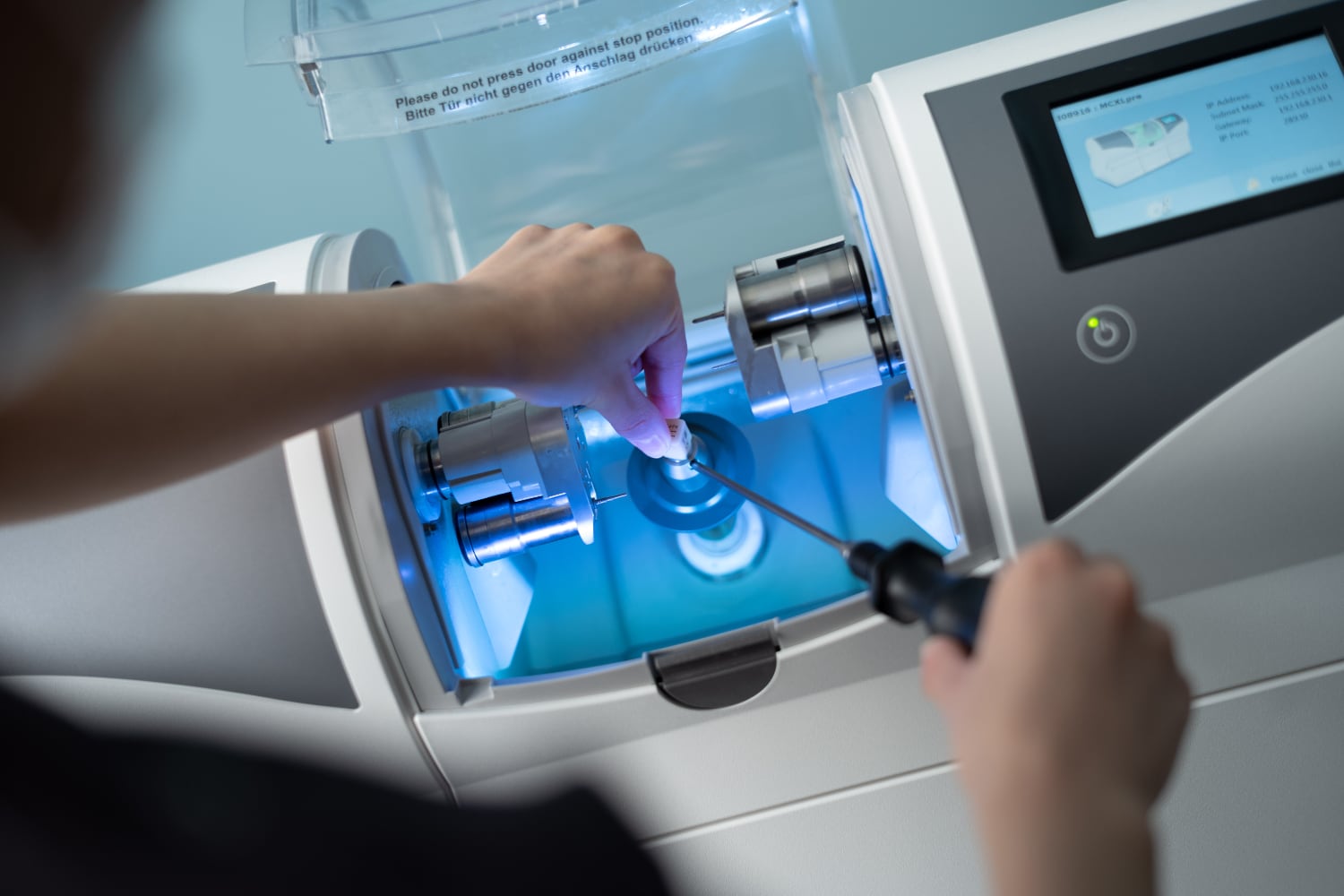
We scan your tooth with a small camera, design the crown or filling on screen, mill it from a block of ceramic in the clinic and bond it in place — often in a single visit. There is no impression putty, no temporary crown and no wait for a dental laboratory.

In-house CAD/CAM milling used for same-day CEREC ceramic restoration
Treatment
Removal of decay or of the old restoration, preparation of the tooth, optical scan, design, in-house milling of a ceramic crown or inlay, try-in, adhesive bonding and bite adjustment. Private (self-pay); Japanese national health insurance cannot be used.
Fee (including tax)
CEREC ceramic restoration: ¥198,000 per tooth. First-visit fee: ¥28,000 (consultation, examination including a periodontal check, X-rays and intra-oral photographs). Follow-up visit: ¥5,500. If root canal treatment is needed after the old restoration is removed: ¥99,000–132,000 depending on the tooth.
Duration & number of visits
In many cases, one visit of about 1–2 hours, finished on the day. Cases that need root canal treatment, a rebuilt core, several teeth, or close colour-matching of front teeth may take more than one visit.
Main risks & side effects
Until the old restoration is removed, the extent of decay underneath cannot be known, so the treatment and the number of visits may change. The ceramic can chip, fracture or come off under strong impact or grinding/clenching. Temporary sensitivity to cold is possible after treatment. Some teeth are not suitable for this method, and the colour of a single front tooth may not be matched in one day.
5-year replacement policy
If the crown or filling breaks within 5 years of being fitted, we make a new one. This does not apply if you did not wear a night guard we asked you to wear, or did not come for regular check-ups. It covers replacing the restoration; it is not a guarantee of the result of treatment.

Dr Kazama has worked with CAD/CAM ceramics since 1999, in practice and in research, and trained at the University of Zurich with the inventor of CEREC. He designs and mills each restoration himself, here in the clinic, which is why the whole process fits into one visit.

Other ceramic treatments, such as laminate veneers (¥264,000 per tooth, tax included) and resin-bonded bridges, may suit your case; we discuss them with you at your first visit.

EXAMPLES

Treatment examples

Photographs of patients treated at this clinic, published with their permission. Each row reads left to right, from before treatment to after. Results differ from person to person, depending on the condition of the tooth.

A large cavity in a back tooth, restored with ceramic in one day

Lower back tooth (molar) · ceramic crown made in the clinic (CEREC)
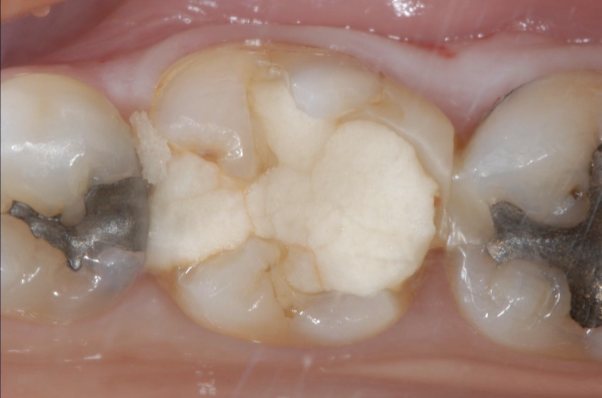
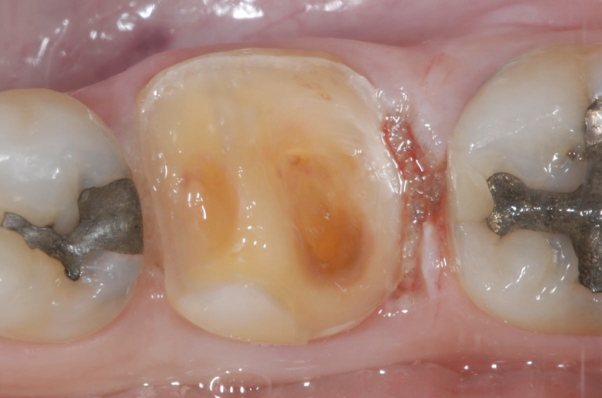
  1. Molar with a temporary filling before treatment

    Before

  2. The tooth after decay was removed and it was shaped

    Tooth shaped

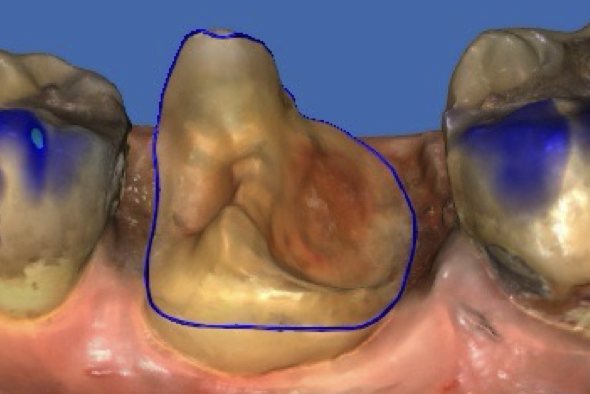
  3. Intra-oral scan of the prepared tooth on the design screen

    Scan and design on screen

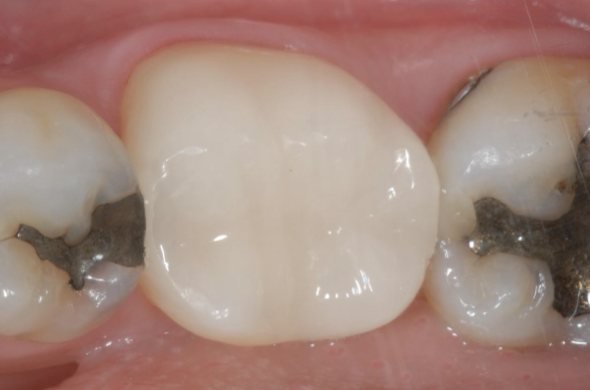
  4. The ceramic crown bonded on the same day

    After

The tooth had a temporary filling from earlier treatment that left a step at the edge, and it was sensitive to cold. Once the decay and the ill-fitting filling were removed, most of the tooth above the gum was gone.

The tooth was shaped while keeping as much healthy tooth and the nerve as possible, scanned with an intra-oral camera, and restored with a ceramic crown designed on screen and milled in the clinic — all on the same day. In this case the sensitivity and the pain on biting settled after treatment; results differ from person to person.

Treatment
Removal of decay and the old filling, shaping of the tooth, optical scan, design and in-house milling of a ceramic crown, adhesive bonding and bite adjustment.
Fee (including tax)
CEREC ceramic restoration ¥198,000 per tooth, plus the first-visit fee of ¥28,000 (including tax). Root canal treatment, if needed, ¥99,000–132,000.
Visits
One visit in this case, finished on the day. In many cases one visit of about 1–2 hours.
Main risks
Until the old filling or crown is removed, the extent of decay underneath cannot be known, so the treatment and the number of visits may change. Ceramic can chip, fracture or come off under strong impact or grinding/clenching. Temporary sensitivity to cold is possible. If decay reaches close to the nerve, root canal treatment may be needed afterwards.

Decay hidden under a metal filling

Back teeth (premolar and molar) · ceramic fillings (inlays)

  1. Back teeth with metal fillings before treatment

    Before

  2. Dark decay found under the removed metal filling

    Metal removed: decay underneath

  3. The tooth after the decay was removed

    Decay removed

  4. Ceramic fillings matched to the tooth colour

    After

A metal filling can look sound from the outside and still have decay spreading underneath. When these fillings were removed, dark decay was found below them.

The decay was removed carefully and the teeth were restored to their original shape with ceramic matched to the tooth colour. The edge where ceramic meets tooth was made smooth, without a step or gap, because a step there collects plaque.

Treatment
Removal of the metal fillings and the decay, shaping of the teeth, and ceramic fillings bonded to the teeth.
Fee (including tax)
CEREC ceramic restoration ¥198,000 per tooth, plus the first-visit fee of ¥28,000 (including tax). Root canal treatment, if needed, ¥99,000–132,000.
Visits
In many cases one visit of about 1–2 hours. More visits may be needed if the decay is deep.
Main risks
Until the old filling or crown is removed, the extent of decay underneath cannot be known, so the treatment and the number of visits may change. Ceramic can chip, fracture or come off under strong impact or grinding/clenching. Temporary sensitivity to cold is possible. If decay reaches close to the nerve, root canal treatment may be needed afterwards.

Two metal fillings in back teeth replaced with ceramic

Lower back teeth (two molars) · ceramic fillings (inlays)

  1. Two molars with metal fillings

    Before

  2. The same two molars with ceramic fillings

    After

The metal fillings in two molars were removed and replaced with ceramic fillings matched to the tooth colour. The grooves and cusps of the biting surface were shaped close to those of a natural tooth, checking how the upper and lower teeth meet.

Treatment
Removal of the two metal fillings, shaping of the teeth, and ceramic fillings bonded to the teeth with a bite check.
Fee (including tax)
CEREC ceramic restoration ¥198,000 per tooth (¥396,000 for two teeth), plus the first-visit fee of ¥28,000.
Visits
In many cases one visit of about 2 hours for two teeth.
Main risks
Until the old filling or crown is removed, the extent of decay underneath cannot be known, so the treatment and the number of visits may change. Ceramic can chip, fracture or come off under strong impact or grinding/clenching. Temporary sensitivity to cold is possible. If decay reaches close to the nerve, root canal treatment may be needed afterwards.

Old fillings and decay on the front teeth, treated with laminate veneers

Upper front teeth (four teeth) · laminate veneers (thin ceramic shells)

  1. Upper front teeth with discoloured fillings before treatment

    Before

  2. Comparing the teeth with shade samples

    Matching the shade

  3. Four finished ceramic laminate veneers

    The finished veneers

  4. The four upper front teeth after the veneers were bonded

    After

The upper front teeth had discoloured old fillings and decay. The surfaces of four front teeth were prepared and thin ceramic shells (laminate veneers) were bonded to them to adjust the colour and shape. The shade was chosen by comparing the teeth with shade samples, so that the veneers blend with the neighbouring teeth.

Depending on the tooth, a veneer can need less removal of tooth than a crown.

Only the four upper front teeth were treated. The back teeth on either side had not been treated at the time of the photograph.

Treatment
Shaping of the front surfaces of the teeth, making of ceramic veneers, adhesive bonding and bite adjustment.
Fee (including tax)
Laminate veneer ¥264,000 per tooth (¥1,056,000 for four teeth), plus the first-visit fee of ¥28,000. A mock-up (¥55,000 per tooth) and a shade appointment with the dental technician (¥33,000 per visit) may be added.
Visits
When the veneers are made in the clinic (CEREC), one visit of about 3–4 hours. When they are made by a dental laboratory, 4–5 visits over about 1–2 months.
Main risks
Tooth surface that has been shaped cannot be restored. Veneers can chip or come off under strong impact or grinding/clenching. Temporary sensitivity is possible. The colour may differ slightly from the neighbouring teeth.

FIRST VISIT

What the first visit includes

  1. Consultation and examination — ¥28,000 (incl. tax)

    We listen to what is bothering you, examine your teeth, take X-rays and photos and check your gums. Before anything is done, we explain your options, what each costs, how many visits it needs and the risks.

  2. Treatment on the same day, where the tooth allows

    If you asked for same-day treatment when you booked and the tooth is suitable, we make and fit the ceramic at this visit. The treatment fee is in addition to the first-visit fee. We set aside about 2 hours for a first visit, longer if treatment follows.

  3. After treatment

    We offer a follow-up visit (¥5,500) to check the new crown or filling and your bite. If you are leaving Japan, we tell you what to look out for and how to reach us by email.

FEES & INSURANCE

Fees, insurance and payment

  • All treatment here is private (jiyu-shinryo), paid by you at the clinic. Japanese national health insurance cannot be used, and we cannot bill overseas or travel insurers directly. If you have travel or overseas insurance, we can give you an itemised receipt in English for your claim.
  • Fees including tax: CEREC ceramic restoration ¥198,000 per tooth; first-visit fee ¥28,000; follow-up fee ¥5,500; root canal treatment, if needed, ¥99,000–132,000.
  • In many cases, treatment is completed in one visit of about 1–2 hours; some cases require more than one visit.
  • Main risks and side effects are listed above with the treatment.
  • Payment: cash (yen), credit cards, e-money and QR-code payments.

FAQ

Common questions

Do you speak English?

Yes. Dr Ryunosuke Kazama sees you himself and speaks English throughout. Our reception team speaks Japanese only, so please contact us in English by email or through the online form rather than by phone. We reply in English.

Can a ceramic crown or inlay really be finished in one visit?

In many cases, yes. The tooth is scanned, the restoration is designed and milled in the clinic, and bonded in the same visit of about 1–2 hours. Cases that need root canal treatment, a rebuilt core, several teeth, or close colour-matching to neighbouring front teeth may take more than one visit.

I am visiting Tokyo for a short time. Can you treat a broken tooth or a lost filling before I leave?

Often, yes. If the tooth is suitable, we can replace a lost or broken filling or crown with ceramic at your first appointment. Please tell us your travel dates when you book so we can plan around them. Whether we can treat the tooth the same day depends on its condition, which we check at your first visit.

My veneer or crown came off. It was done abroad. Can you bond it back on?

Usually, yes, if the veneer or crown is undamaged and still fits. We see patients whose work was done by another dentist, including overseas. Re-bonding is ¥11,000 for one tooth (¥33,000 for two or more), plus the first-visit fee of ¥28,000, all including tax. Please keep the piece in a clean container and bring it with you. If it is cracked, does not fit, or there is decay underneath, we explain the options for a new restoration and their fees before any treatment.

My zirconia or e.max crown has chipped or cracked. What can you do?

We first check the crown, the tooth underneath and your bite. A crown that has chipped or cracked usually cannot be bonded back reliably, so we make a new one; a new CEREC ceramic crown is ¥198,000 per tooth and is often made in one visit. If a crown has come off undamaged and still fits, it can usually be bonded back (¥11,000). The first-visit fee is ¥28,000. All fees include tax. We explain the options and their fees before any treatment.

How much does it cost?

The first visit (consultation, examination including a periodontal check, X-rays and photographs) is ¥28,000 including tax. A CEREC ceramic restoration is ¥198,000 per tooth including tax. If root canal treatment is needed first, that is ¥99,000–132,000 depending on the tooth. All fees are private; Japanese national health insurance is not accepted.

Is this treatment covered by insurance?

Japanese national health insurance cannot be used, and we cannot bill overseas or travel insurers directly. You pay at the clinic, and we can give you an itemised receipt in English so you can claim from your insurer.

What is the 5-year replacement policy?

If the ceramic crown or filling breaks within 5 years of being fitted, we make a new one. It does not apply if you did not wear a night guard we asked you to wear, or did not come for regular check-ups. It covers replacing the restoration; it is not a guarantee of the result of treatment. If you live outside Japan, please ask us at your visit how the check-up condition works for you.

How do I pay?

Cash (Japanese yen), credit cards, e-money and QR-code payments are accepted.

Request an appointment   How appointments work

Written and medically reviewed by Ryunosuke Kazama, DDS, PhD, Director
Part-time Lecturer, Institute of Science Tokyo (former Tokyo Medical and Dental University); Clinical Professor, Matsumoto Dental University
Last updated: 11 November 2026